Never Lose a Customer After an Unanswered Call with Automatic SMS
Automatically send SMS after unanswered calls, recover more leads, and improve customer response times. Teleleo helps businesses turn missed calls into conversations without extra effort

Every unanswered call is a moment of decision for the person on the other end. They called because they wanted something — information, a quote, a booking, an answer. When nobody picked up, they had a choice: wait, try again, or move on. Most move on.
Automatic SMS changes that dynamic. Instead of leaving a caller with silence, you respond within seconds — even if you are with another customer, in a meeting, or simply outside working hours. The message arrives before the caller has had time to dial a competitor.
This article explains how SMS follow-up for missed calls works, why it matters for businesses of all sizes, and how Teleleo makes it straightforward to set up and run.
Why Missed Calls Lead to Lost Customers and Missed Revenue
The gap between a missed call and a lost customer is shorter than most businesses realise.
Research consistently shows that the majority of callers who do not reach a business on the first attempt do not call back. They do not leave a voicemail. They do not send an email. They go elsewhere. In competitive markets — trades, healthcare, legal services, property, retail — that means a competitor answers a call you generated. You paid for the lead, and someone else closed it.
The problem is compounded by timing. A missed call is not just a missed call — it is a missed moment. The person who called is in a state of intent. They want to act now. Every minute that passes after the unanswered call reduces the probability of converting that person into a customer. By the time you call back an hour later, they may already have made an appointment somewhere else.
The common responses to this problem — hiring someone to answer all calls, paying for a call answering service, setting up a voicemail — all address the symptom rather than the cause. Voicemail, in particular, has fallen dramatically in effectiveness. A significant proportion of callers, particularly younger ones, will not leave a message and will not listen to one. It is a tool from a different era of communication.
What callers do respond to is a text message. SMS has consistently high open rates — the majority of messages are read within minutes of being received. A well-timed automatic SMS, sent the moment a call goes unanswered, keeps the conversation going at the moment the caller is still engaged.
How Automatic SMS Follow-Up Works After an Unanswered Call
The mechanics are straightforward. Teleleo is a compact modem connected to the internet that handles your calls and SMS independently — it does not rely on your phone being on or nearby. When a call goes unanswered, the modem detects it and instantly sends a pre-written SMS to the caller's number. From the caller's perspective, the experience is remarkably close to being answered. They called, and the business responded almost immediately.
There is an important distinction worth understanding: the SMS follow-up feature in Teleleo is designed primarily for outbound calling workflows, not just inbound missed calls. When you are working through a call list and someone does not pick up, the modem tracks it and fires off the follow-up message automatically. You keep dialling; the modem handles the follow-up in the background. You never have to stop, compose a message, or switch to another app.
The message comes from your real number with your chosen text — no bot signatures, no third-party sender ID. To the recipient it looks exactly like a message you typed yourself.
Setting up the rule takes three steps:
- Go to SMS → Call Follow-Up SMS in the Teleleo dashboard, click Create, enter a rule name (e.g. "Missed Call Follow-up"), and select the device.
- Write your follow-up message. For example: "Hi, just tried to reach you. Call me back when you're free — I have a great offer for you." You can also add the contact's name using variables for a personal touch.
- Fine-tune the settings — daily SMS limits, no-answer hang-up time, minimum successful call duration — then start dialling as normal.
From that point, the rule runs silently in the background. You can create multiple rules for different scenarios and activate them on a schedule or manually depending on the campaign.
SMS Follow Up for Missed Calls: Key Benefits for Customer Retention and Engagement

The case for SMS follow-up is not just about recovering leads. It affects the whole relationship between a business and its callers across several dimensions.
Immediate acknowledgement reduces frustration. When someone calls and gets no response at all — no message, no text, nothing — they feel ignored. An automatic SMS changes that perception entirely. Even if you cannot speak right now, the business has responded. That single act of acknowledgement significantly reduces the likelihood that the caller will simply give up and go elsewhere.
Higher conversion rates from inbound leads. Every inbound call represents a potential customer who has already decided they are interested. Converting that interest into a sale or booking depends heavily on response time. Businesses that respond within the first few minutes of a missed call recover a much higher proportion of those leads than those that call back hours later.
Better customer experience outside office hours. For businesses that are not open around the clock, after-hours calls are a constant source of lost opportunity. Automatic SMS gives those callers something useful — opening times, a link to book, an invitation to leave their query by text — rather than leaving them with silence or a voicemail they are unlikely to engage with.
Reduced pressure on reception and support staff. Not every missed call needs an immediate phone response. Many callers simply need to know they have been heard and that someone will be in touch. An automatic SMS handles that reassurance, allowing staff to prioritise which calls genuinely require an urgent callback.
A written record of initial contact. Every automatic SMS creates a timestamped record of when the missed call occurred and when the response was sent. This has value for CRM tracking, compliance purposes, and dispute resolution.
Scalability. A business handling twenty calls a day and one handling two hundred calls a day both benefit equally. The system responds to every missed call regardless of volume, which means no caller falls through the cracks simply because the team is stretched.
These benefits are most pronounced for small and medium-sized businesses, where the team is lean enough that missed calls are a regular occurrence — and where every lost lead has a direct and visible impact on revenue.
Business Text Back After Missed Call: Real-World Use Cases Across Different Industries
The principle is universal, but what it looks like in practice varies by the person making the calls. Here are three real examples from businesses already using Teleleo, followed by a broader look at where the feature applies.
James — sales manager with a big call list. James runs a small telecom agency and dials 50+ prospects every day. About half go to voicemail and prospects forget to call back. With Teleleo's follow-up SMS running in the background, every unanswered number gets an automatic text the moment the call fails to connect. James keeps dialling; the modem tracks every miss and fires the message instantly. The result: 15% more conversations from the same calling effort, with no extra time spent.
Sarah — estate agent following up leads. Sarah calls new property applicants, many of whom do not answer unknown numbers. She set up a simple auto-reply: "Hi, Sarah from London Properties here. Saw you viewed our listing — call me back when you can." The message goes out automatically each time a call goes unanswered. The result: more viewings booked and fewer leads going cold before she can reach them.
Mike — small business owner wearing many hats. Mike runs a plumbing business and calls warm leads between jobs. He cannot always stop mid-job to compose a follow-up message. If a lead does not answer, the modem sends: "Mike from 24/7 Plumbers here — returning your enquiry. Call me back or reply with a good time." No lead is forgotten, even on his busiest days.
These three cases share a common pattern. The person dialling is either too busy to follow up manually or working at a volume where manual follow-up is simply not practical. The modem handles the part that used to get skipped.
The same logic applies across other contexts:
- Recruiters keeping candidates warm when they do not answer an unknown number the first time.
- Healthcare and wellness providers at peak call times — rather than leaving callers waiting or missing calls entirely, an immediate SMS can acknowledge the contact and point to an online booking link.
- Legal and financial services where a slow response can feel alarming to a client in a time-sensitive situation — an immediate acknowledgement with a realistic callback timeline significantly reduces client anxiety.
- Restaurants and hospitality where a reservation call that goes unanswered is a booking that goes elsewhere.
In each of these contexts, the underlying need is the same: the caller wants to know they have been heard and that a response is coming. Automatic SMS delivers that assurance at a cost and complexity level accessible to businesses of any size.
SMS Autoresponder for Missed Calls: How It Improves Response Time and Customer Experience
Response time is one of the most consistent predictors of conversion in any service business. The longer the gap between a customer's first contact and a business's first response, the lower the probability of a successful outcome — regardless of what is communicated in that response.
An SMS autoresponder for missed calls addresses this directly. Rather than the first substantive response arriving when someone gets around to returning the call, the initial contact is made automatically, within seconds, at the moment the caller is still focused on their need.
Consider the difference in experience from the caller's perspective:
Without an autoresponder: The phone rings. Nobody answers. The caller hangs up. A few hours later — or the next morning, if it was an after-hours call — they receive a callback from an unknown number. By this point, they may have forgotten the context of why they called, may already have resolved their need elsewhere, or may simply not answer a number they do not recognise.
With an autoresponder: The phone rings. Nobody answers. Within seconds, the caller receives a text message acknowledging the missed call, explaining when they can expect a response, and offering them a way to share their query in the meantime. The caller feels acknowledged. They are more likely to wait for the callback, more likely to engage when it comes, and more likely to ultimately become a customer.
The difference in outcome between these two scenarios is not marginal. It is the difference between a lead that is still warm when you reach it and one that has gone cold.
Beyond the initial response, an SMS autoresponder creates a channel for follow-up that many callers actually prefer to a phone conversation. They can reply to the message at their convenience, provide detail that would have been harder to convey over the phone, and engage with the business at a pace that suits them. For the business, this often means better quality initial information and fewer back-and-forth calls to establish the basics.
How to Send SMS After Unanswered Call Using Teleleo
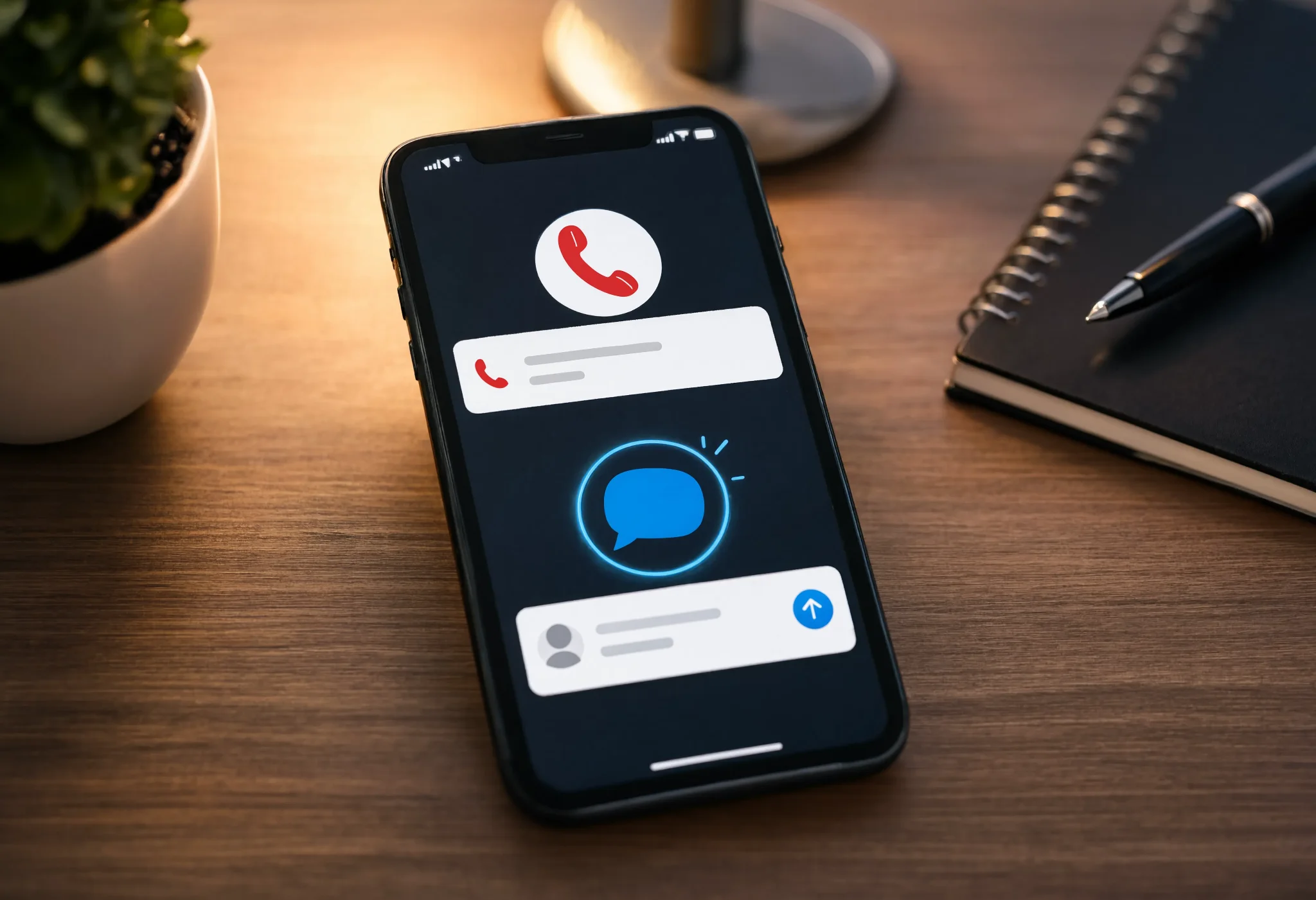
The setup process is genuinely simple — no developers, no heavy configuration, no IT support required. The rule is created in the Teleleo dashboard and runs silently in the background from that point.
Here is exactly how it works:
- Go to SMS → Call Follow-Up SMS in the dashboard. Click Create and give the rule a name — something like "Missed Call Follow-up" or "Outbound Campaign Follow-up".
- Select your device. If you have more than one SIM connected, choose which one the rule applies to.
- Write your message. Keep it short and direct. The Teleleo dashboard supports variables, so you can personalise the text with the contact's name if you have it. A message like "Hi [Name], just tried to reach you — call me back when you're free" takes seconds to write and sounds human because it is.
- Set your limits. Configure daily SMS limits per rule, the no-answer hang-up time (how many seconds of ringing counts as unanswered), and the minimum successful call duration if you want to exclude very short connections from triggering a follow-up.
- Start dialling. The modem monitors every call you make. Each time a number goes unanswered, the follow-up SMS fires instantly, from your number, without any action from you.
There is no separate app to manage. Everything — your call settings, SMS rules, call history, and follow-up logs — lives in the same Teleleo dashboard, accessible from a browser or the Teleleo mobile app.
One practical note: because the modem connects to the internet independently, the follow-up feature works whether you are in the office, at home, or anywhere abroad. If you are calling UK numbers from Lisbon or Bangkok, the SMS still goes out from your real UK number the moment a call fails to connect. The caller's experience is identical to what it would be if you were sitting in a London office.
Best Practices for SMS After Unanswered Calls and Building an Effective Follow-Up Strategy
Setting up automatic SMS is straightforward. Getting the most out of it requires a small amount of ongoing thought. The following practices make a significant difference to the results.
Keep the first message short and human. The automatic SMS that arrives after a missed call is not the place for marketing copy or detailed information about your services. The caller already knows who you are — they rang you. What they need is acknowledgement and a clear next step. Something like: "Hi, sorry we missed your call — we're with a customer at the moment and will ring you back within the hour. If it's urgent, please reply to this message." That is enough. Clear, human, and immediately useful.
Set realistic expectations in the message. Do not promise a callback "shortly" if shortly means three hours. If your realistic callback time is the next morning, say so. Callers who receive a message that accurately sets expectations are far less likely to move on than callers who receive a vague promise that is then not kept.
Use different messages for different contexts. A blanket response to every missed call is better than no response, but it is not as effective as a tailored one. Business hours and after-hours calls warrant different messages. A call to your sales line and a call to your support line probably need different responses. If your business handles multiple service types, consider whether callers enquiring about different things would benefit from different initial responses.
Include a clear call to action. The message should make it easy for the caller to take the next step. That might be:
- Replying to the SMS with their query
- Clicking a link to book an appointment or callback slot
- Being directed to a specific page on your website
- Calling an alternative number if the matter is urgent
Without a clear action, the message is an acknowledgement but not a conversation-starter. The goal is to move the relationship forward, not just to confirm you exist.
Monitor reply rates and adjust. If you are sending automatic SMS messages and very few callers are replying or following through, that is data worth acting on. It may indicate that the message is not offering a useful next step, that the tone is off, or that the timing needs adjusting. Treat your SMS setup as something to iterate on, not a one-time configuration.
Integrate with your CRM or booking system. The full value of SMS follow-up is realised when it feeds into your broader customer management workflow. A missed call that generates an SMS reply, which is then logged in your CRM alongside the caller's details and contact history, gives your team the context they need to follow up effectively. Without that integration, you are recovering leads but not necessarily managing them well.
Review periodically. Message templates that made sense when you wrote them may become outdated as your business changes — new services, changed opening hours, different team capacity. A brief review every few months keeps your automated responses accurate and relevant.
The common thread through all of these practices is intentionality. Automatic SMS is a powerful tool precisely because it removes the need for manual action on the first response. But the setup behind it — the message, the timing, the call to action, the integration — benefits from deliberate thinking. Done well, it becomes one of the highest-return elements of a business's customer communication strategy: low cost, low maintenance, and directly tied to revenue.
Conclusion
Missed calls are an unavoidable part of running a business. What is avoidable is the default outcome — the caller who hears nothing, moves on, and becomes someone else's customer.
Teleleo's SMS follow-up removes that default. You keep dialling; the modem tracks every unanswered call and sends your pre-written message instantly, from your real number, with no manual effort. The rule is configured once. After that, no missed call goes without a response — regardless of how many calls you make in a day, how busy the team is, or where in the world you happen to be working.
The modem is £34.99, the monthly subscription is £9.99, and there is a 30-day free trial that gives you full access to all features. If unanswered calls are costing you business — and they almost certainly are — it is worth finding out exactly how much the follow-up pays for itself.
Was this article helpful?


